PT EN ES

Find out what is the difference between ore, metal, minerals and rocks

What differentiates an ore from a mineral? Is every metal an ore? Is ore a rock? Sometimes, some doubts may arise concerning mining, mainly due to the business complex characteristic. After all ore is sold directly to other companies and reaches the consumer as an end product, including cell phones, computers and cars.

Check the difference among four terms related to mining that can be easily mixed up.

Minerals

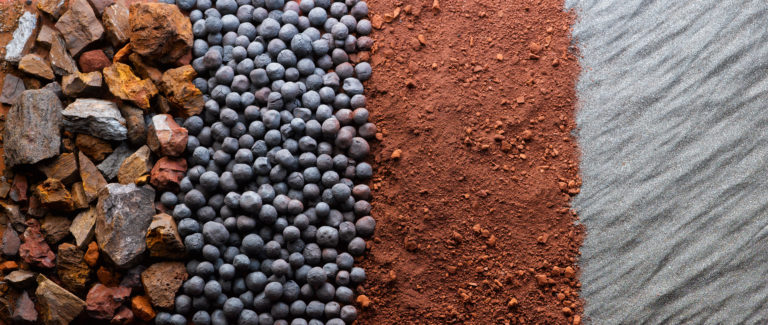
Mineral is a solid and crystalline natural body formed as a result of physicochemical process interactions in geological environments. Each mineral is classified and named not only based on its chemical composition, but also in the crystalline structure of the materials that comprise it. To find out a mineral composition, a chemical and physical analysis is performed, which determines relative proportions of different chemical elements of that mineral and its crystalline structure (for instance, quartz, pyrite, hematite, etc.).

Rock

Rocks are aggregates of one or more minerals. Thus, it can be stated that every rock is comprised by minerals. It is possible to find out what they are made of by means of analyzing their chemical or mineralogical composition. The latter expresses different mineral proportions that comprise the rock.

Ore

It is a rich mineral aggregate in a specific mineral or chemical element that is economically or technologically viable for extraction (mining). Copper, for instance, occurs naturally in some rock types, but it is only possible to become an ore when it concentrates in large quantities and it is possible to be extracted from nature.

Metals

They are the elements extracted from some ores found in soils and rocks – iron and copper are collected from ores in the adequate form to be used; steel and bronze, on the other hand, they need to be associated with other substances. Metals can be separated in two groups: ferrous (comprised by iron), like iron and steel, and non-ferrous, like aluminum, copper and heavy metals (lead, nickel, zinc and mercury).
Copper: a significant ally in virus and bacteria control

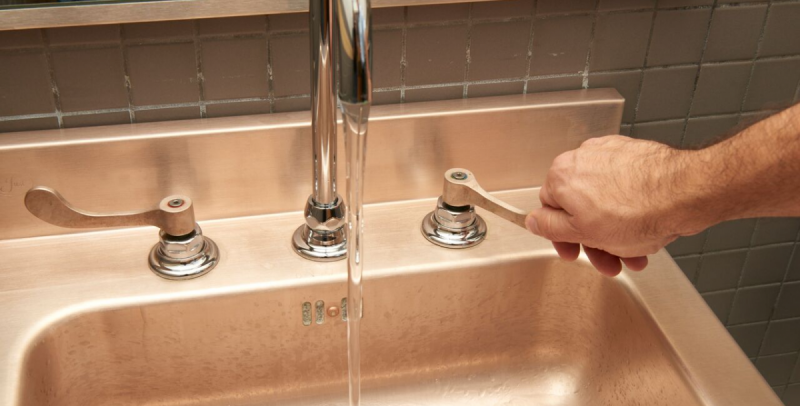
Did you know that copper destroys viruses and bacteria? The discovery was performed by the physician Victor Burq in the 19th century, in Paris, according to a paper published on Vice website. At the time, there were cholera outbreaks that reached the city and employees of a copper cast house, that had daily contact with the ore, were not reached by the disease. At the same time, he discovered that other workers handling copper in Paris capital and in other European cities had also prevented cholera.

From a data collection with more than 200 thousand people, he reached a conclusion to France Science and Medicine Academies in 1967, that ‘copper and its alloys, brass and bronze, literally applied in the skin in the cholera epidemic are efficient prevention means and should not be neglected’

Through the years, studies showed that copper is a major ally and has bacterial threat protection: it is an antimicrobial. It was proven that the metal kills a long list of microbes, including norovirus, MRSA, an Staphylococcus bacteria that became resistant to antibiotics, E. coli virulent strains that can cause food intoxications, and coronavirus – possibly the new strain currently causing COVID-19 pandemic.

But why doesn´t the world use more copper? After all, it could reduce microbe presence in main surfaces, a door for the human being to contaminate him/herself with different infirmities. Maybe due to the value. But, as an analysis is performed, it is possible to reverse this situation, as the ore could be a major ally in hospital infections and even in coronavirus pandemic control, thus governments would not have to spend so much in disease cure.

Read the full text in Vice website

Learn more on copper and its relevance to public health

After strict tests and assessments, the United States Environmental Protection Agency filed copper alloys as public health antimicrobial materials. Surfaces touched frequently made of copper alloy materials kill bacteria continuously within two hours of contact, when regularly cleaned.

More than 500 copper alloy types are filed in the United States Federal Insecticide, Fungicide and Rodenticide to control pests without adverse effects to the human being and the environment.

Three major characteristics that make antimicrobial copper alloys highly efficient in contact surface materials:

  • It kills bacteria continuously

It is proven that copper material is much more efficient as an antimicrobial surface than a stainless steel material, and it kills infection-causing bacteria continuously.

  • It never wears out

Even after dry, wet cleaning and contact with infection-causing bacteria, it remains with continuous microbial action efficacy.

  • Safe to use

Copper surfaces are not harmful to people or the environment. It has inherent microbial even without chemicals added. And it is totally recyclable.

Covid-19

A study performed by the United States Centers for Disease and Prevention reported that SARS – CoV-2 virus, that causes Covid-19, is kept alive from two to three days in plastic and stainless steel surfaces, however, in copper alloy surfaces, the virus is kept alive for up to 4 hours.

Such information was obtained from the website https://www.copperalloystewardship.com/

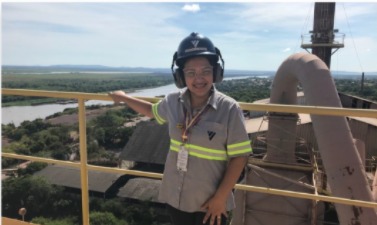
Adriana Celestino – A cement plant leader

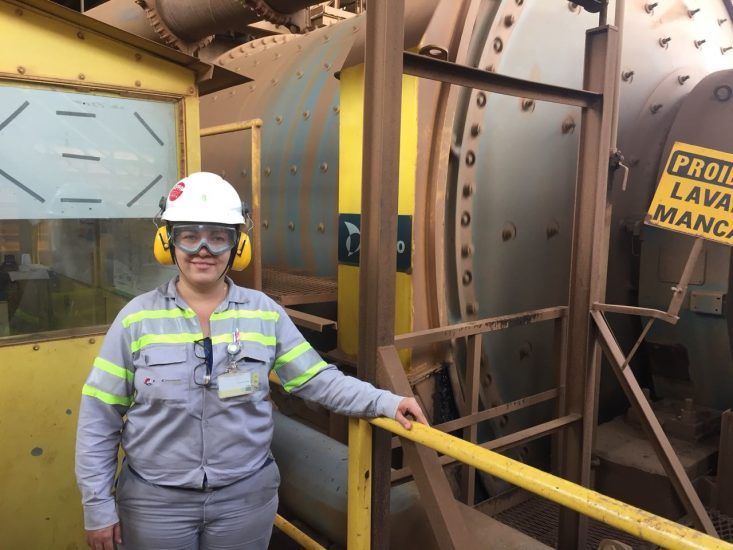
Votorantim Cimentos Corumbá (MS) plant manager, Adriana Celestino has built her career supported by a global company template, which includes in its strategic milestones talent cultivation, with diversity valuing

Objectivity and focus. Features that Adriana Celestino de Souza Camargo has sustained since college. Graduated in Chemistry at Universidade Federal de Minas Gerais (UFMG) and post-graduated in Industrial Quality at Centro Federal de Educação Tecnológica de Minas Gerais (Cefet-MG), Adriana started in the work market as Lab analyst in an industry, however, since her first days of experience she was determined to achieve a leadership position.

In January, 2019, 45-year old Adriana Celestino became the first female employee to reach the leadership of a Votorantim Cimentos plant in the country. She is Corumbá (MS) plant new manager, one of the most traditional plants of the company in the Mid-West, which operates since the 1950´s and employs 230 direct and indirect employees.

In order to reach the plant top position, Adriana Celestino went through a long path. And in the industrial sector, still ruled by the male gender, achieving a promotion demanded from Adriana not only objectivity and focus, but also commitment and braveness to change and take risks in new ventures to reach her goal.

‘When I started my career, I progressed from Lab analyst to Production head, however, I realized this was the highest position I would reach. I decided then to search for new opportunities and I heard about a hiring process for a Production coordinator vacancy in another industry. When I heard in the interview that it was Votorantim Cimentos, I took the challenge of starting over, as I realized I would have more growth possibilities’, Adriana said, who started in the company in 2008.

Adriana started to work at Votorantim Cimentos as Production coordinator, a position she held until 2012, in São Paulo (SP). Later, she moved to the Federal District where she worked in Sobradinho (DF) plant as Mortar and Cement Production coordinator and Production and Environment area coordinator. Then, she took over the operation, in the city of Cajamar (SP), as mortar plant manager, and finally, as Metropolitan Compound manager, which includes, besides Cajamar site, Barueri (SP) site. In late 2018, she was asked to take over as cement plant manager in Corumbá (MS).

Diversity valuing – When she remembers the path she went through until becoming manager in Corumbá, Adriana talks with excitement about the projects she executed and that fostered a positive image of her within the company. She was responsible for triggering Sobradinho and Cajamar mortar plant manufacturing capacity, and she also led the Mortar Metropolitan Compound implementation, among other initiatives.

For Adriana, as essential as placing her career development as one of her life priorities is working in an environment that supports and fosters professional development, regardless of color, race or gender. ‘Since the day I started working at the company, I have always been engaged in significant activities, with interface with several areas. I have also gathered knowledge from areas in which I had no experience so far, including business strategy and marketing, and I believe that would not be so easy in another company’, she says.

Corumbá plant manager also highlights that the great organizational environment made the difference concerning her professional development. ‘So far, I am excited with taking over the management of Votorantim Cimentos Corumbá plant. I had a great welcome by the team and what I am willing to do right now is developing a solid legacy. The employees have a long-term relationship with the plant, and my greatest challenge is improving the site performance, placing it as one of the most productive within the company’, Adriana added.

José Filho: production operator

Unlike many professionals who move away from their homes to search for opportunities and better life standards in regions like South and Southeast, the North was chosen and the ‘open door’ for José Filho´s career, Imerys employee. Northeastern coming from the state of Piauí, the production operator that works in the mining company processing plant, located in Barcarena (Pará), found in Imerys and in Pará the opportunity of his lifetime.

Married for 12 years and father of a girl, the Piauí natural has worked in the company since 2005 and started his career as production assistant. Acknowledged by the colleagues as someone that is an example to be followed in his work environment, before coming to Imerys, José managed to get experience in other companies from the field. He has already worked in a company linked to cement production.

For the operator, more than a workplace, Imerys is a learning space. ‘For me, Imerys is a school. Everything I know about kaolin and about my work I learned here. The company gave me the opportunity to grow professionally and I am very grateful for my work’, José said.

Michelle Teixeira – Process Coordinator

Mining became part of Michelle Teixeira´s life at 35 years of age, still pretty young. Inspired by her father, that worked in a mining company in the state of Goiás, she was fascinated by the field pace. However, it was in Industrial Chemistry college that mining actually became part of her life.

After working in some companies, Michelle arrived three years ago at CMOC International Brasil, more precisely in Copebras, the company phosphate operation, in Catalão, Goiás countryside. She worked as process analyst, and for three months, she was promoted to Process Coordinator, and she leads, directly, a six-person team, all men. Her duties include process indicator follow-up and operation technical support, very important to trigger the company phosphate production, and she is also engaged in different company relevant projects.

Married and mother of a six year-old daughter, Michelle still reconciles motherhood and studies. She took MBA in Quality Management, she is an ore treatment expert at Universidade Federal de Goiás – UFG, and she currently attends a masters course in Mineral Technology, at Universidade Federal de Minas Gerais.