
PT EN ES

Our health relies on mining

Did you take care of yourself today? Did you brush your teeth? Did you take your medication? Did you do exercises? Did you schedule your yearly check-up to see if everything is OK? These actions are part of our routine, however, we don´t usually realize that health care would be impossible without mining.

Minerals are present in the toothpaste we use every day, in the food supplement, in the thermometer or in the glucose meter device. Medications would not exist without elements including phosphorus, calcium, sulphur, magnesium, copper, zinc, boron, manganese, sodium, barium, among others. Do you know the sneakers you wear to run or the gym equipment you use to work out? They are the fruits of the products developed by means of mining.

Nowadays, most procedures and techniques used in medicine and health rely on state-of-the-art machines and equipment, and the industry as a whole. From simple surgery gadgets, including knives, scissors, drills and scalpels, to more sophisticated devices, including MRI and CT scanning, they all depend on mineral elements to be built. It is mining working for the benefit of health.
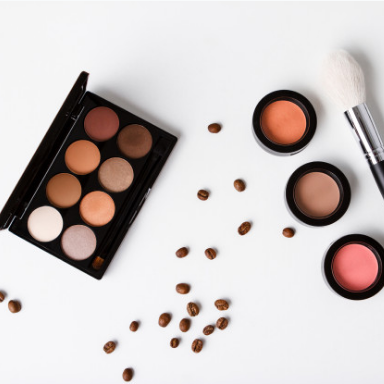

From personal care to esthetics: mining is the greatest ally of cosmetics manufacturing

The name ‘cosmetic’ comes from the Greek word ‘kosmetikós’, meanings ‘skillful to adorn’. Thus, the industry searches to manufacture several external use products, with the purpose of cleaning, perfuming, changing looks, protecting, keeping in fine condition or correcting body odors. They include: soaps, deodorants, perfumes, talc, oral hygiene and hair products, sunscreens and makeup.

Pharmaceutical and cosmetic product wide range found in the market derive from numberless types of raw materials, whether from mineral, vegetal or animal origin. A list of several mineral assets, including clay minerals (kaolin and bentonite), lime (calcite), sulphur, mica (muscovite) and talc are used in the industry according to their properties, action forms and purpose.

Makeups, for instance, are comprised by a range of minerals. In lipstick, pencil and blush formula, it is possible to find titanium dioxide, used as ultraviolet radiation blocker; mica, which is responsible for gloss in some products; zinc oxide, which prevents micro-organism proliferation. To control skin oiliness, iron oxide and bismuth chloride are used.

It is worth noting that beauty industry changes every day. Advanced researches in mineral, pharmacological and cosmetic market enable ongoing discoveries and new product development. Mining is part of your wellbeing.

Source:  http://recursomineralmg.codemge.com.br/wp-content/uploads/2018/10/FarmaceuticosCosmeticos.pdf

Niobium is in the main sightseeing places

Discovered by the English chemist Charles Hatchett in 1801, from columbite mineral studies, niobium is an element found in nature, although it is not found freely in nature, but in ores, including columbite and tantalite. It is a soft, safe and available metal, and ductile, malleable and highly resistant to corrosion. Due to its characteristic of enhancing properties and features, niobium is used in a wide range of materials to provide more strength.

Niobium can be found in federal capital city sightseeing places, including JK Bridge and the mast that supports the National Flag, that shakes daily in Ministry Court, in Brasília (DF).

Structures including the bridge, with 12.4 thousand tons and 1200 meter long, with considerable clear spans, are built more easily – and with lower costs – as special steels were used, produced with niobium in its composition.

Niobium is used currently in cars, plane turbines, gas pipelines, ships, MRI device, medical devices, including pacemaker, as its metal alloys are physiologically inert and with hypoallergenic features, particle accelerators, lenses and even piercings and fashion jewelry, and in high technology industry: superconductor magnet wire manufacturing used in particle accelerator.

Brazil is not the only country with niobium reserves. However, it is the largest product by far, with 90% of the world market of this metal, which demand is small, but it includes a series of applications, as in high technology industry.

The largest niobium reserve is found in the city of Araxá-MG.

Characteristics

Chemical properties: it is the chemical element of atomic number 41 and atomic mass 92.9 u. Its symbol is Nb. It belongs to the table 5th period and group 5, and thus, it is considered a transition metal in chemical element period classification. Its chemical properties are similar to tantalum (Ta), located in the same group below niobium.

Physical properties: it is a shining metal, with grey coloring, and in normal conditions, it is solid (melting temperature: 2477°C; boiling temperature: 4744°C). It is ductile and has superconductor properties, and it is resistant to corrosion.

Sources: CBMM / IBRAM / Brasil Escola / G1 websites